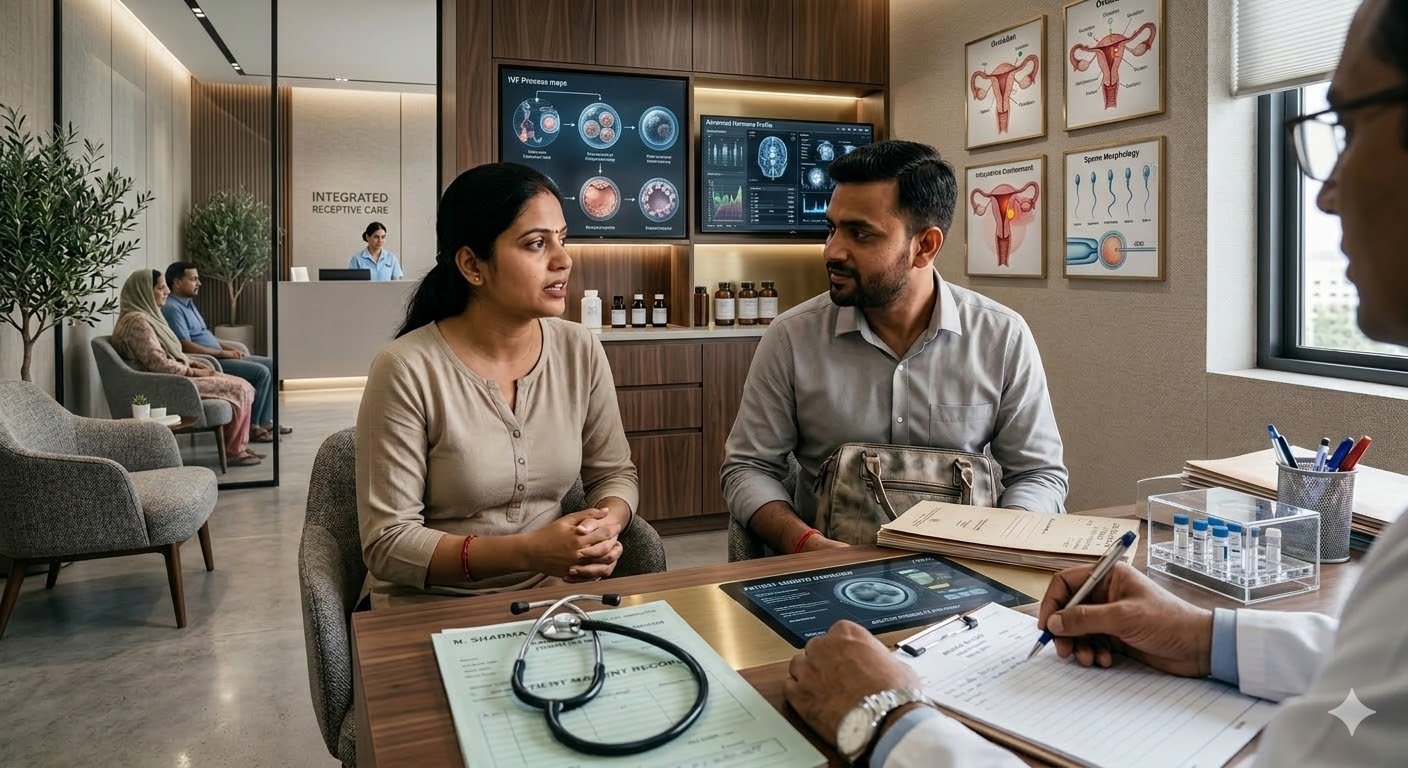
Fertility-enhancing surgery includes selected gynecological or reproductive procedures performed to improve the chances of conception or support better fertility outcomes. At She Delhi, surgery is advised only when there is a clear clinical reason and when it may improve reproductive planning, symptom control, or treatment response.
Fertility-enhancing procedures may include hysteroscopic, laparoscopic, or other reproductive surgeries depending on the diagnosis. These surgeries may be recommended to address fibroids affecting the uterine cavity, adhesions, polyps, septum, endometriosis, tubal issues, or other structural factors that may interfere with conception, implantation, or pregnancy.
Not all fertility problems require surgery. At She Delhi, the decision is made only after correlating symptoms, scan findings, prior treatment failure, age, ovarian reserve, and fertility goals.
Surgery may be considered in situations such as:


Fertility-enhancing surgery may be advised for:
At She Delhi, the decision to move to Fertility-enhancing surgery is made only after proper consultation and investigation.
IVF is not just a medical procedure — it’s a journey filled with hope, resilience, and emotional strength. For many, it represents a second chance at building the family they’ve always dreamed of. With supportive care and advanced technology, IVF continues to be a beacon of possibility in the field of reproductive health.
Helping individuals and couples.
Helping individuals and couples.
Helping individuals and couples.
Ultrasound, fertility records, symptoms, and previous treatment outcomes are reviewed carefully.
The type of procedure is chosen according to the anatomical problem and fertility objective.
Surgery may be performed via hysteroscopy, laparoscopy, or another appropriate reproductive route depending on diagnosis.
Healing, menstrual recovery, and next-step fertility timing are discussed after the procedure.
Once the uterine or pelvic environment is optimised, natural conception, IUI or IVF may be planned according to the broader fertility picture.

When correctly indicated, fertility-enhancing surgery may improve the reproductive environment by correcting structural or anatomical barriers. The benefit depends on the exact diagnosis, extent of disease, surgical outcome, age, ovarian reserve, sperm quality, and follow-up fertility treatment. Surgery is most helpful when chosen for the right patient at the right time.
No. Surgery is advised only when there is a correctable structural reason.
This depends on the diagnosis and may include hysteroscopic or laparoscopic procedures.
In selected cases, correcting uterine or pelvic issues may help treatment planning.
This depends on the procedure performed and your doctor’s advice.
Not always. The right choice depends on age, diagnosis, and the overall fertility profile.

Copyright © 2025 Sampurna Health Enclave Pvt Ltd All Rights Reserved.