
Azoospermia is a male infertility condition in which no sperm is found in the semen sample. While the diagnosis can feel overwhelming, it does not always mean that fatherhood is impossible. At She Delhi, we offer structured evaluation and advanced fertility guidance for azoospermia, helping couples understand the cause, available treatment options, and the next best step with clarity and confidence.
Azoospermia means the absence of sperm in ejaculate. It is broadly divided into two major categories: obstructive azoospermia, where sperm production may be normal but a blockage prevents sperm from appearing in semen, and non-obstructive azoospermia, where sperm production itself is reduced or severely affected.
This condition can be identified only through proper semen testing and follow-up evaluation. At She Delhi, azoospermia is never treated as a single-label diagnosis. A detailed assessment is needed to determine whether the problem is hormonal, testicular, genetic, obstructive, or related to prior infection, surgery, or developmental factors. The treatment pathway depends on that distinction.
Possible causes of azoospermia include:
Azoospermia itself often does not cause obvious symptoms. Many men have normal sexual function and only discover the issue during infertility work-up.


Azoospermia evaluation and treatment may be needed for:
At She Delhi, male fertility is evaluated in coordination with female fertility factors so the couple receives a complete reproductive plan.

At She Delhi, the decision to move to the treatment is made only after proper consultation and investigation.
IVF is not just a medical procedure — it’s a journey filled with hope, resilience, and emotional strength. For many, it represents a second chance at building the family they’ve always dreamed of. With supportive care and advanced technology, IVF continues to be a beacon of possibility in the field of reproductive health.
Helping individuals and couples.
Helping individuals and couples.
Helping individuals and couples.
Azoospermia is first identified through semen analysis. A repeat test may be required to confirm the diagnosis accurately.
Medical history, sexual history, previous surgery or infection history, and physical examination are reviewed in detail.
Hormone testing, ultrasound, and selected advanced investigations may be advised to determine whether the problem is obstructive or non-obstructive.
If obstruction is suspected, sperm retrieval or procedural treatment may be considered. If sperm production is reduced, the team may plan further fertility options such as surgical sperm retrieval, IVF-ICSI, or advanced reproductive counselling depending on the case.
In suitable patients, retrieved sperm may be used with IVF-ICSI for assisted conception.

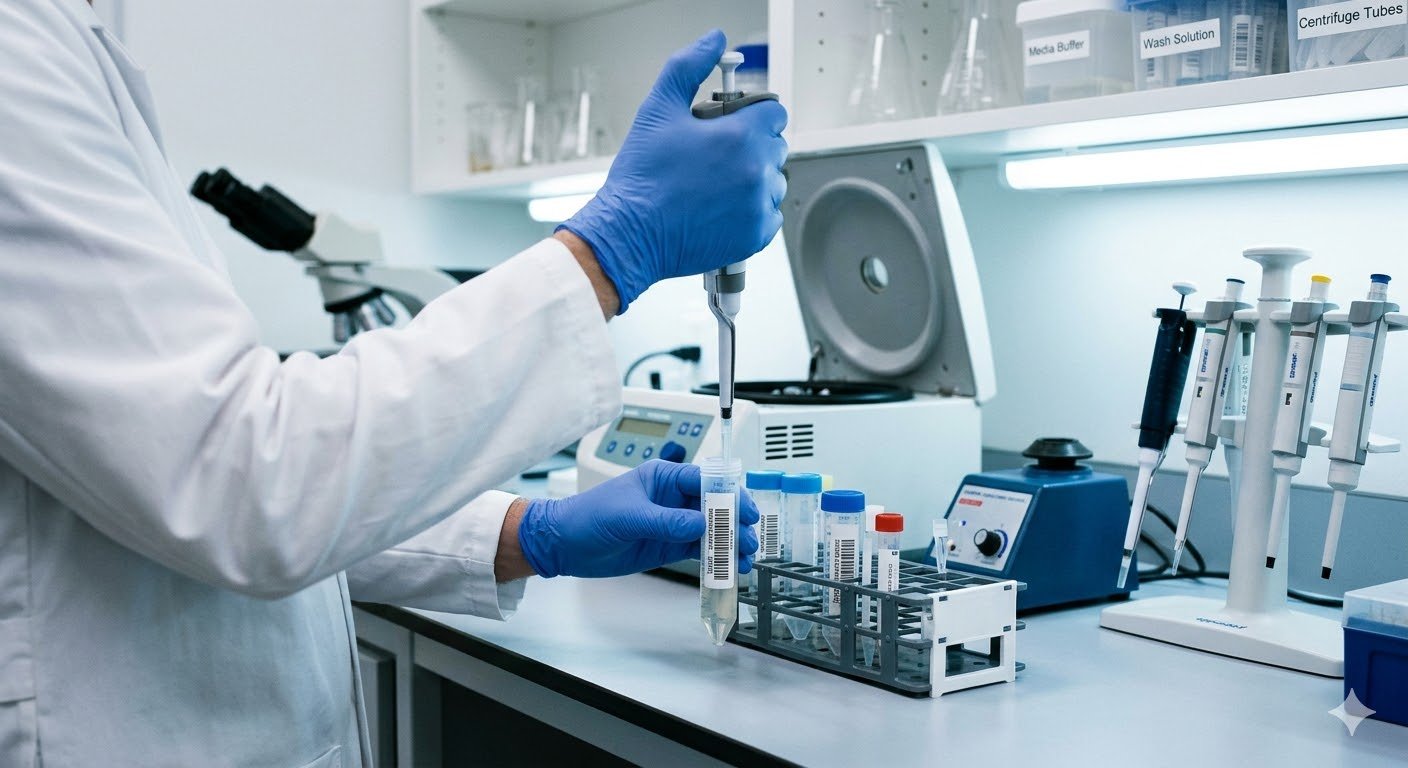

The main benefit of proper azoospermia treatment is that it helps identify whether sperm may still be obtained and used for fertility treatment. Success depends on whether the azoospermia is obstructive or non-obstructive, the underlying cause, hormonal health, testicular condition, female partner factors, and whether sperm retrieval is successful. Early expert evaluation can prevent unnecessary delay and improve planning.
Not always. Some men may still have retrievable sperm depending on the cause.
It is diagnosed through semen analysis and confirmed with further evaluation.
Obstructive azoospermia usually means sperm production may be happening but sperm cannot reach semen due to blockage, while non-obstructive azoospermia is related to poor sperm production.
Yes, IVF-ICSI may be used if sperm can be retrieved and the couple is suitable for assisted reproduction.
Often it does not cause visible symptoms and is found during infertility testing.

Copyright © 2025 Sampurna Health Enclave Pvt Ltd All Rights Reserved.