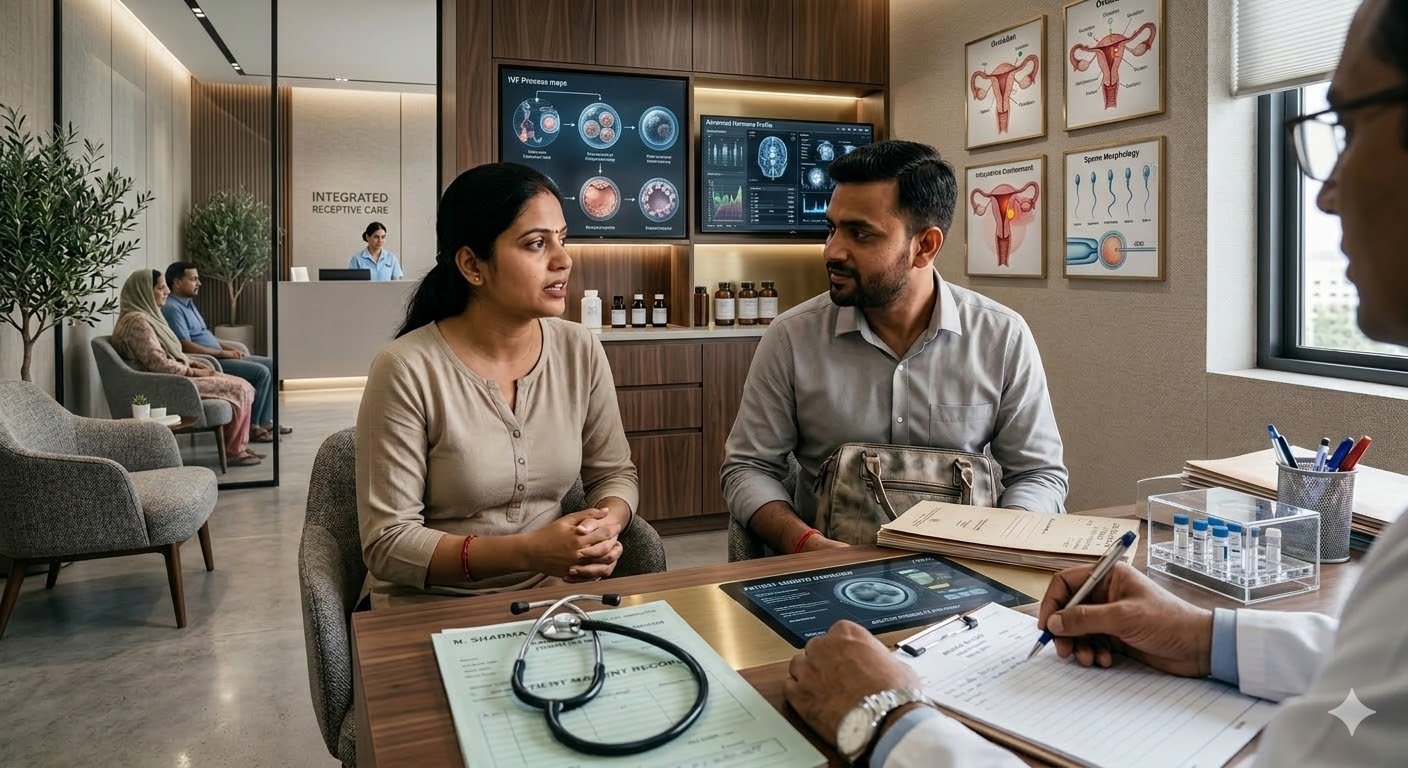
A Testicular Biopsy Test may be advised in selected male infertility cases, especially when azoospermia or severely reduced sperm production needs further evaluation. At She Delhi, this test is considered only after clinical assessment and when it may meaningfully guide diagnosis or fertility planning.
A testicular biopsy involves taking a small tissue sample from the testis for examination. In fertility care, it may be used to understand sperm production status or to help differentiate specific causes of azoospermia. In selected situations, the procedure may also be linked with sperm retrieval planning.
This is not a routine first-line test. It is recommended in a targeted andrology work-up when simpler investigations are not enough.
A testicular biopsy involves taking a small tissue sample from the testis for examination. In fertility care, it may be used to understand sperm production status or to help differentiate specific causes of azoospermia. In selected situations, the procedure may also be linked with sperm retrieval planning.
This is not a routine first-line test. It is recommended in a targeted andrology work-up when simpler investigations are not enough.
A testicular biopsy may be advised in cases such as:


This procedure may be suitable for:

At She Delhi, the decision to move to the treatment is made only after proper consultation and investigation.
IVF is not just a medical procedure — it’s a journey filled with hope, resilience, and emotional strength. For many, it represents a second chance at building the family they’ve always dreamed of. With supportive care and advanced technology, IVF continues to be a beacon of possibility in the field of reproductive health.
Helping individuals and couples.
Helping individuals and couples.
Helping individuals and couples.
History, semen analysis, hormonal profile, and prior reports are reviewed first.
The doctor explains why the biopsy is being advised and how it may help the fertility plan.
A small sample is taken under planned medical conditions for diagnostic assessment, and in selected cases sperm retrieval opportunity may also be considered.
The tissue is examined to evaluate sperm production-related findings.
The result helps decide whether IVF-ICSI, sperm retrieval-linked treatment, or further male fertility guidance is required.

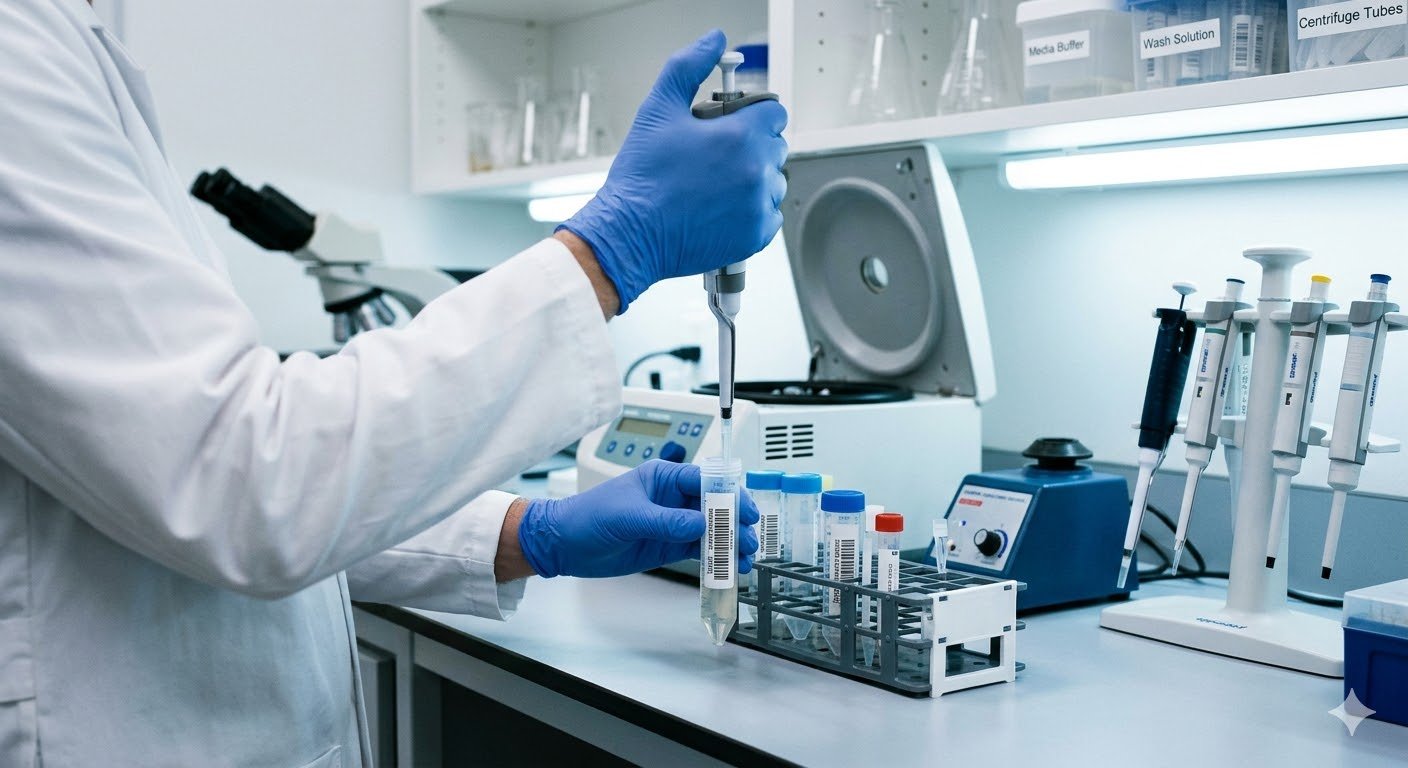
The benefit of a testicular biopsy lies in better diagnostic clarity. It can help determine whether sperm production is present and guide more accurate fertility treatment planning. The usefulness depends on why the biopsy is being done and how its findings fit with the overall fertility profile of the couple.
No. It is used selectively in specific male infertility situations.
It may help assess sperm production and guide the next fertility step.
In selected cases, it may be linked with retrieval planning depending on the clinical scenario.
Primarily diagnostic, though it may also support fertility planning in certain cases.
Yes, in some patients it can contribute to that decision.

Copyright © 2025 Sampurna Health Enclave Pvt Ltd All Rights Reserved.